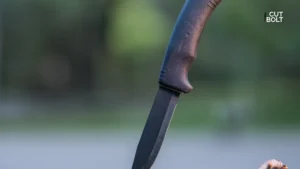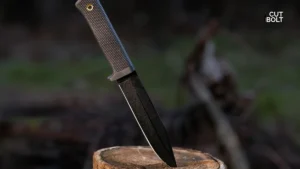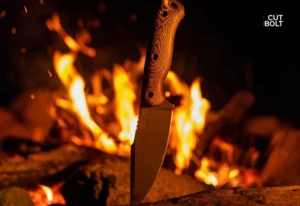

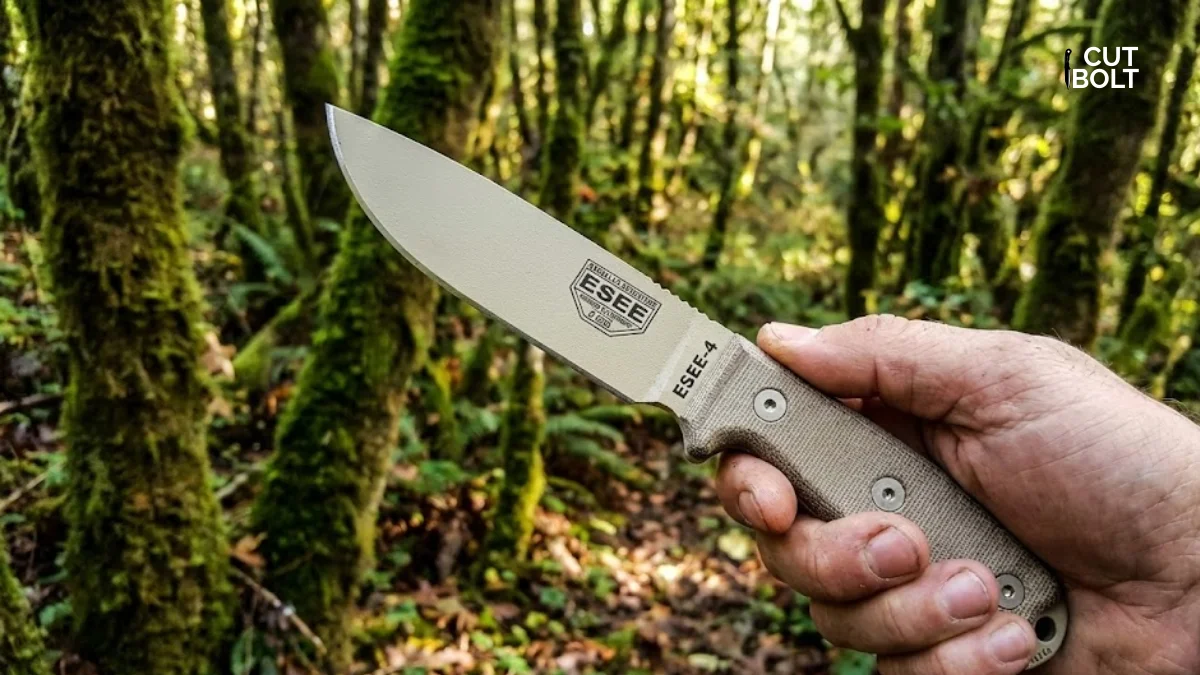
Few fixed blades have earned the long-term trust of military personnel, law enforcement teams, and backcountry professionals quite like the ESEE-4, a knife that consistently stands out in any serious ESEE 4 review. Designed by Randall’s Adventure & Training as a compact, no-nonsense survival tool, the ESEE-4 embodies the company’s philosophy of rugged simplicity: a blade that endures abuse, sharpens easily in the field, and integrates seamlessly into any carry system.
Whether you’re building shelter, processing wood, or tackling day-to-day camp chores, the ESEE-4 has become a benchmark for reliability in the mid-sized survival knife category. Before diving into its performance, let’s break down the core specifications.
Why we recommend ESEE 4 knife:
- 1095 High-Carbon Steel Blade – Extremely tough and easy to sharpen in the field, making it ideal for survival and bushcraft situations where maintenance tools are limited.
- Full-Tang Construction – The blade runs through the entire handle, delivering superior strength and reliability for heavy tasks like batoning, carving, and prying.
- Textured G10 Handle Scales – Provides a secure, non-slip grip even in wet, muddy, or cold conditions, improving control during demanding outdoor work.
- Compact Mid-Size Design – With a balanced blade length, it’s large enough for serious outdoor tasks but still manageable for everyday field use and carry.
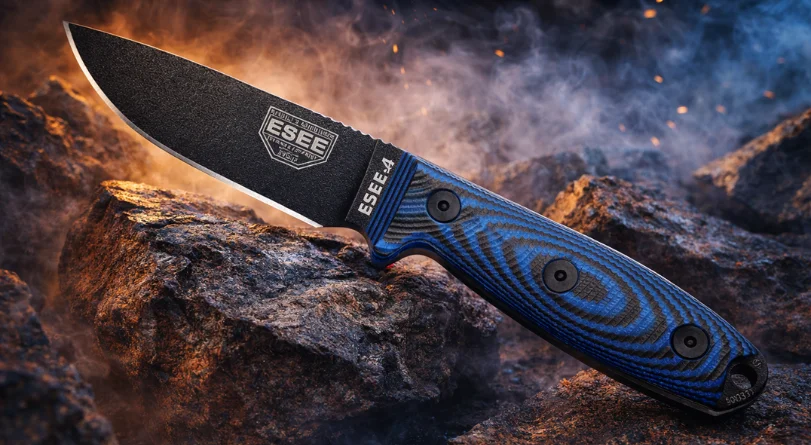
ESEE 4 Knife Specifications
| Category | Data |
| Overall Length | 9.0 in |
| Blade Length | 4.5 in |
| Cutting Edge | 4.06 in |
| Blade Thickness | 0.1875 in (≈3/16″) |
| Steel / HRC | 1095 Carbon Steel / 55–57 HRC |
| Blade Style | Drop Point |
| Blade Grind | Flat |
| Blade Finish | Black Powder Coat (varies by model) |
| Handle Material | Micarta (3D Micarta & G-10 optional) |
| Sheath | Polymer/Kydex with MOLLE Back |
| Weight | 8.0 oz |
| Country of Origin | USA |
| Best Use | Survival, Bushcraft, Camp, Duty Carry |
Steel & Material Analysis
ESEE hardens their 1095 carbon steel to a deliberately soft 55–57 HRC, optimizing the blade for field serviceability instead of long-term wear resistance. At this hardness, 1095 forms a uniform martensitic structure with minimal carbide content, which translates to:
- excellent shock resistance
- predictable rolling rather than chipping
- fast, forgiving sharpening on basic stones
For bushcrafters and military users with limited sharpening gear, this is precisely what you want. High-alloy super steels maintain an edge longer but are harder to reprofile in the field. ESEE’s philosophy prioritizes survival reliability over edge longevity.
Micarta handles contribute their own functional strengths: dimensional stability in wet conditions, excellent texture retention, and a warm tactile feel. ESEE’s newer 3D Machined Micarta offers even better ergonomics, though the classic slabs remain durable and lightweight.
Blade Design & Geometry
The ESEE-4’s full flat grind and moderate 3/16″ blade stock create a durable geometry that handles a wide range of tasks. The drop-point profile offers controlled tip engagement for carving, field dressing, and utility piercing without being overly delicate.
Physics-wise:
- The thick spine provides stability for batoning through small to medium logs; it transfers impact energy straight down the centerline with minimal deflection.
- The high flat grind maintains cutting efficiency despite the stout stock. It wedges more than a Scandi or thin convex edge, but remains predictable.
- The modest distal taper keeps the tip strong enough for digging or controlled prying while still enabling fine puncture work.
This blade is not tuned for fine slicing—its thickness limits featherstick fineness on dense hardwoods—but it excels in structural tasks, fire prep, and general survival chores.
Build Quality & Fit/Finish
ESEE maintains extremely consistent machining across their production line. The spine is crisp but not harsh. Tang-to-scale fit is tight, with no sharp transitions or gaps. Fasteners are large, serviceable, and corrosion-resistant, making scale swaps straightforward.
The powder coat is uniform and rugged, designed to absorb abrasion rather than flake under hard use. It does, however, inhibit ferro-rod sparking—a known tradeoff. Uncoated or alternative finishes are available for users who prioritize fire-starting compatibility.
Overall, the knife’s finish prioritizes functional durability over cosmetic refinement. It feels like a tool meant to be used hard, not admired.
Edge Retention & Sharpening Experience
Edge retention is modest by design. Expect the knife to dull after:
- repeated contact with seasoned hardwood
- extended cardboard or rope cutting
- heavy batoning sessions
But the payoff is field serviceability. You can bring the edge back on:
- a river stone
- pocket ceramic
- basic bench stones
The steel responds quickly, and the wide bevel is easy to maintain at a consistent angle. For extended trips, this low-maintenance sharpening behavior is an asset.
Sheath & Carry System
The ESEE-4’s polymer sheath with MOLLE back is one of the more versatile systems in its class. Retention is firm with an audible snap, and re-sheathing is secure even under movement. The MOLLE back enables:
- vertical belt carry
- horizontal/scout carry (with adapters)
- pack strap mounting
- plate carrier integration
For traditional belt carriers, the MOLLE straps can be stiff to thread through heavy leather belts. Once attached, however, the system is extremely stable. Removing the MOLLE plate reveals a slimmer sheath better suited to Tek-Lok or soft loops.
A drainage port at the bottom ensures reliability in wet conditions.
Weight, Balance & Ergonomics
At 8 ounces, the ESEE-4 strikes a balance between portability and authority. The balance point sits slightly forward of the handle’s midpoint, giving the blade a confident feel for light chopping while remaining agile for daily tasks.
Micarta slabs offer excellent texture when wet or gloved. Grip styles:
- Hammer grip: secure, comfortable, full control
- Saber grip: excellent directional precision
- Chest lever: comfortable thanks to the neutral handle shape
- Reverse grip: functional, though not its core purpose
Users with large hands may find the original flat scales somewhat thin under prolonged pressure; the newer 3D scales significantly improve palm-filling ergonomics.
Durability & Hard Use
The ESEE-4’s full-tang construction and moderate hardness make it exceptionally tough. It excels in:
- batoning
- prying bark and splitting kindling
- scraping wood and tinder
- shelter building tasks
Under extreme lateral stress, the edge will roll before it chips—a controlled, field-correctable failure mode preferred for survival purposes.
The powder coat adds a layer of corrosion resistance while also protecting the blade from abrasion in rough environments. Structurally, the knife is designed to survive repeated impact cycles and hard outdoor abuse.
Rust & Corrosion Resistance
1095 is carbon steel—it will rust if neglected. The powder coat protects broad surfaces, but the:
- edge
- laser-engraving zones
- exposed spine
- area beneath handle scales
are vulnerable to oxidation. In humid, coastal, or jungle environments, regular maintenance is required. A thin film of TUF-GLIDE, Eezox, or similar is recommended.
For users operating in wet climates who prefer lower-maintenance gear, ESEE now offers the 4 in 440C and CPM S35VN, both of which resist corrosion extremely well.
Price vs. Performance (Value Proposition)
The ESEE-4’s value lies not in exotic materials but in:
- U.S. manufacturing
- consistent heat treatment
- modularity (scales, steels, sheaths)
- lifetime “no-questions-asked” warranty
- reliability under real field conditions
While some competitors offer more advanced steels at similar prices, few deliver ESEE’s blend of durability, usability, and ecosystem support. It remains one of the most customizable survival knives on the market.
Pros & Cons
Pros
- Exceptional durability; rolls before chipping
- Fast, simple field sharpening
- Excellent sheath modularity and carry versatility
- Ergonomic Micarta handles with upgrade options
- Proven track record among military and law enforcement users
- Lifetime unconditional warranty
Cons
- Powder coat prevents ferro rod strikes
- Edge retention modest compared to modern steels
- Original scales may feel thin for large hands
- Thick stock limits fine carving and slicing performance
- Carbon steel requires consistent rust prevention
Final Verdict
The ESEE-4 stands as one of the most dependable mid-sized survival knives available. It embodies ESEE’s design philosophy: tough, field-maintainable, and mission-ready, free from gimmicks and engineered for real-world abuse.
It’s ideal for:
- bushcrafters wanting a reliable do-all blade
- search & rescue operators
- military personnel needing a rugged duty knife
- outdoor professionals who value serviceability over long-term edge holding
This is not the knife for users who demand stainless convenience, surgical slicing ability, or minimalist weight. It is the knife for anyone who needs a tool that shrugs off hard work, sharpens easily, and performs consistently in the worst conditions.
ESEE-4 Fixed Blade Knife with Sheath
Summary
Bottom line: a proven, rugged survival workhorse that continues to set the benchmark for mid-sized field knives.