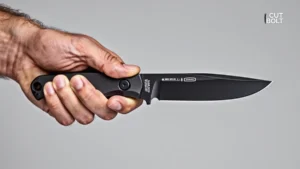

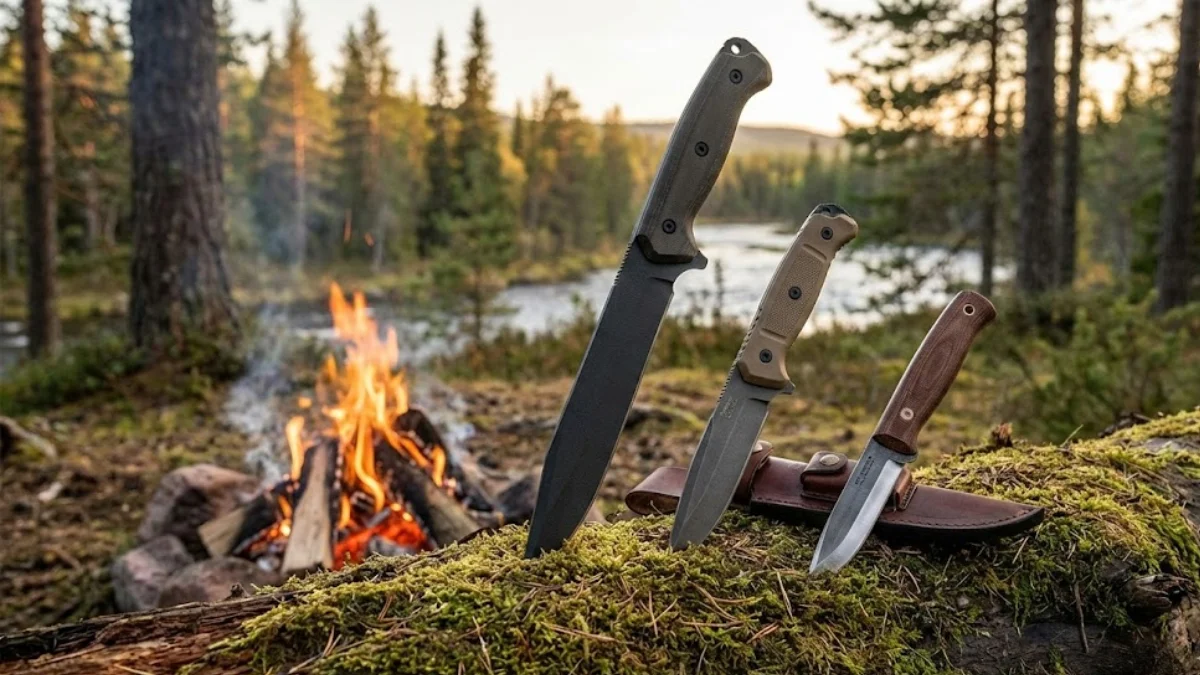
Finding the best survival knife can be the difference between struggling in the wild and thriving. When the plan goes sideways and you are miles from civilization, your knife isn’t just a piece of gear—it’s your lifeline. Whether you are building an emergency shelter, splitting wood for a fire, or processing game, the blade on your belt is the one tool that simply cannot fail.
But what actually makes a knife a “survival knife”?
Unlike a standard pocket knife or a delicate slicer, a survival knife is the ultimate “one-tool option.” It is designed to be a jack-of-all-trades: tough enough to baton through hardwood knots, precise enough to carve a feather stick, and durable enough to withstand prying or digging without snapping.
In this guide, we’ve field-tested the top blades on the market—from budget-friendly workhorses to premium super-steels—to help you find the best survival knife for your specific kit.
Quick Top Picks:
| Category | Knife Model | Why We Chose It |
| Best Overall | ESEE 4 | The industry benchmark for reliability and warranty. |
| Best Budget | Morakniv Bushcraft Black | Unbeatable performance for under $50. |
| Best Premium | Reiff F4 | Elite MagnaCut steel and perfect ergonomics. |
| Best Heavy Duty | Off-Grid Tracker XXL | A massive chopper that acts like a compact machete. |
| Best Tactical | Toor Brauler | Compact, tough CruWear steel for duty use. |
Testing Methodology: How We Ranked These Knives
We didn’t just look at spec sheets; we evaluated these blades based on their performance in real-world field conditions. To earn a spot on this list, each knife had to pass a series of functional tests designed to mimic actual survival scenarios.
- Wood Processing & Batoning: We tested structural integrity by batoning knives through hardwood knots. We looked for edge rolling or chipping—specifically noting how thicker spines, like the 5mm stock on the Off-Grid Tracker XXL, handled the impact compared to thinner blades.
- Edge Retention & Sharpness: We processed cardboard, rope, and wood shavings to see how long the working edge lasted. We evaluated how premium steels like the Reiff F4’s MagnaCut held an edge versus easily field-sharpenable steels like the 1095 carbon found on the Ka-Bar Ek Commando.
- Ergonomics & “Hot Spots”: A survival knife is useless if it hurts your hand. We tested grip comfort during high-pressure carving and chopping, specifically checking for “hot spots” on handles like the Off-Grid Backcountry V2’s G10 scales versus the rubberized grip of the Demko FreeReign.
- Fire Starting: We tested the ability of the knife spines to throw sparks from a ferro rod. Knives with sharp 90-degree spines, such as the Reiff F4, were rated higher for fire-prep utility.
- Sheath Security: We performed a “shake test” to ensure retention. We looked for systems with zero rattle, such as the Off-Grid Backcountry V2’s Kydex, and deducted points for sheaths that felt loose or stiff, like the break-in period required for the Ka-Bar Ek Commando.
Best Survival Knives for Every Budget
Here are the 15 survival knives that we picked up:
1. ESEE 4 (1095 Carbon Steel): Best Tough Survival Knife
Best For: Toughest Survival & Field Use
Specs:
- Blade Length: 4.5″
- Steel: 1095
- Handle: Linen Micarta
- Weight: ~8.0 oz
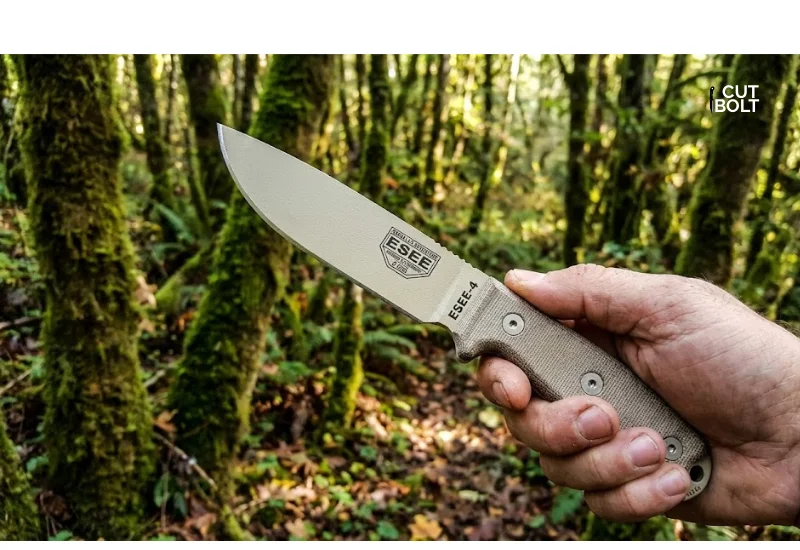
The Breakdown: The ESEE 4 is built around 1095 carbon steel, tuned for real-world abuse with excellent toughness and predictable field sharpening. The full-flat grind balances durability with slicing efficiency, and the 4.5-inch drop point offers outstanding control for carving, notching, and game processing. ESEE’s heat treat is famously consistent—one of the reasons this blade has earned its reputation as a near-indestructible survival tool. It’s not stainless, but with a little maintenance, it shrugs off harsh environments.
Design & Ergonomics: The gray linen Micarta handle provides a warm, secure grip that remains comfortable through extended cutting or bushcraft work. Its contouring avoids hotspots while giving excellent traction wet or dry. The knife’s mid-weight build feels sturdy without being cumbersome, and its balance point lands naturally for both fine work and power cuts. The polymer sheath with MOLLE backing delivers reliable retention and versatile mounting options, especially for pack straps and tactical rigs.
Pros
- Ultra-tough 1095 with proven heat treat
- Comfortable, durable Micarta handle
- Full-flat grind excels in both slicing and survival chores
- MOLLE-compatible sheath for versatile carry
Cons
- Carbon steel needs regular rust care
- Not optimized for chopping due to size
- Sheath is solid but not premium
- Handle can feel slim for very large hands
Our Honest Take: The ESEE 4 is one of the toughest mid-size survival knives ever made—field tested by military, law enforcement, and serious outdoorsmen for good reason. If you want a dependable, do-everything blade backed by ESEE’s legendary no-questions-asked guarantee, this is the pick that won’t quit.
2. Best Military Survival Knife – Ka Bar John Ek Commando Short Clip Point
Best For: Tactical Field Survival
Specs:
- Blade Length: 5.125″
- Steel: 1095
- Handle: Polymer
- Weight: 10.40 oz
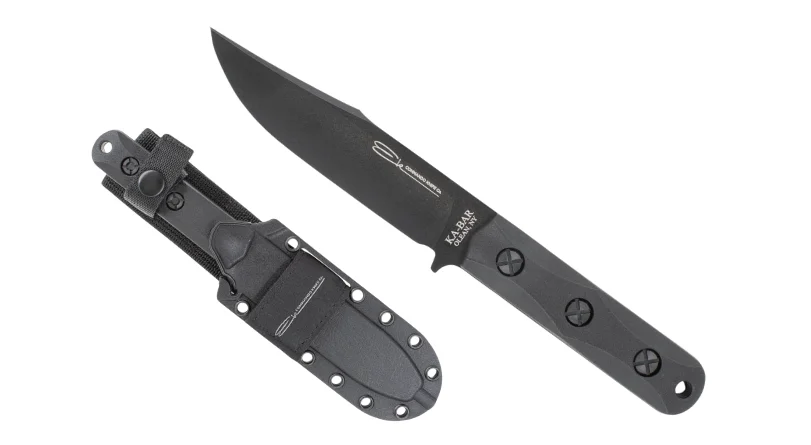
The Breakdown: The Ek Commando’s 1095 high-carbon steel delivers tough, predictable performance in hard-use scenarios. Its flat grind gives the blade a keen, easily maintainable edge, while the clip-point tip adds piercing ability without sacrificing strength. The black coating helps resist rust—important with 1095’s lower chromium content—while also reducing glare. The 5.125″ blade hits a sweet spot: long enough for utility and defensive roles, compact enough for precise control.
Design & Ergonomics: The polymer handle is shaped with squared, hand-filling geometry reminiscent of classic Ek fighters, offering a secure grip even with gloves. While it’s not as contoured as modern ergonomic designs, the straight profile excels in retention and directional awareness. Jimping is minimal but effective. The polymer sheath rides tight with minimal rattle and provides solid retention, though the draw is slightly stiff until broken in. Overall balance favors quick maneuverability rather than chopper-like power.
Pros
- Tough 1095 steel with excellent field sharpenability
- Strong clip-point tip ideal for tactical tasks
- Secure squared handle improves retention
- Durable polymer sheath with solid retention
Cons
- 1095 requires diligent rust prevention
- Handle lacks contouring for long-duration comfort
- Sheath draw can feel stiff initially
- Not optimized for heavy wood processing
Our Honest Take: If you want a compact, no-nonsense survival/tactical knife built for reliability over flash, the Ek Commando Short Clip Point delivers. It’s not a comfort king or a bushcraft workhorse, but for soldiers, first responders, or anyone who wants a rugged defensive-leaning fixed blade with classic heritage, it’s an easy recommendation.
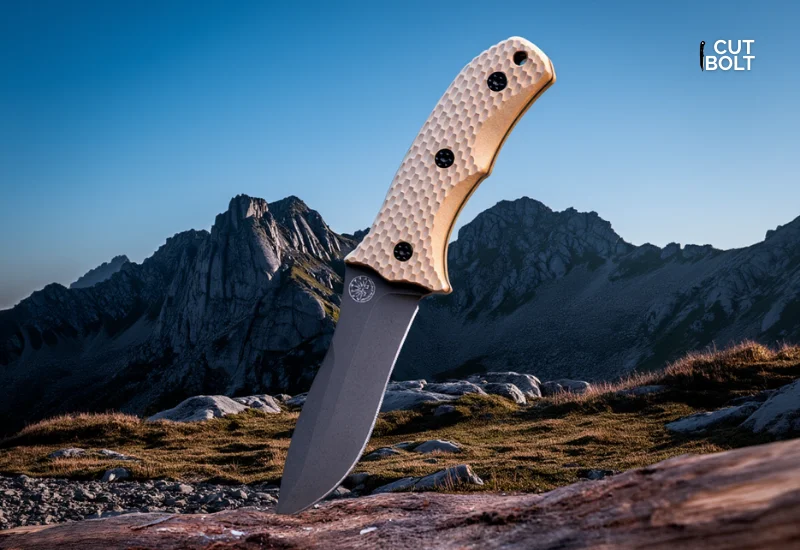
3. Off Grid Backcountry V2 (D2)
Best For: Survival & Tactical / Hunting & Field Use
Specs:
- Blade Length: 4.5″
- Steel: D2 (HRC 61)
- Handle: G10 (Coyote Tan)
- Weight: 10 oz (12 oz w/ sheath)
The Breakdown: The Backcountry V2’s D2 tool steel at 61 HRC offers strong edge retention while still being field-sharpenable—a good balance for a knife meant to cut, slice, and pierce more than baton heavy knots. At 4.10 mm thick, the drop-point blade stays stout without feeling sluggish, and the graywashed TiN finish adds abrasion resistance while dulling reflections. Its 4.5″ working length makes it equally suited for game processing and survival chores.
Design & Ergonomics: The contoured G10 handle is grippy without being overly aggressive, and its 4.75″ length accommodates gloved hands well. The geometry avoids hot spots during extended push cuts, and the neutral indexing makes it easy to transition between grips. The coyote-tan Kydex sheath locks the knife down firmly with almost no rattle; retention is secure but not overly tight, making for a smooth draw. Balance sits slightly forward, adding authority to cuts but still feeling nimble.
Pros
- High-retention D2 hardened to 61 HRC
- Comfortable G10 handle with excellent traction
- Durable Kydex sheath with solid retention
- Versatile blade length for field and survival tasks
Cons
- D2 is semi-stainless and needs corrosion care
- Not ideal for heavy batoning
- Forward balance may feel tip-heavy to some
- Sheath bulkier than minimalist setups
Our Honest Take: If you need a do-everything fixed blade for hunting, survival, or duty use, the Backcountry V2 punches above its weight. It’s tough, secure in hand, and built for real field abuse. As long as you maintain the D2, it’s a dependable tool ready for serious work.
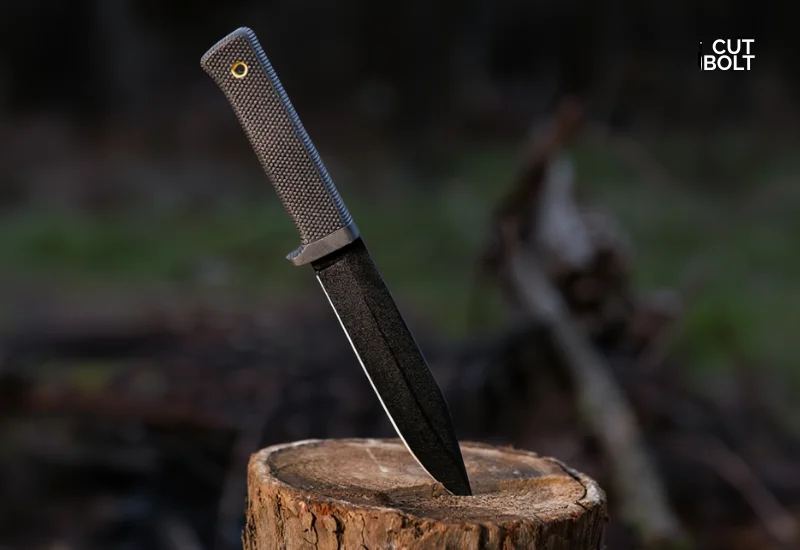
4. Cold Steel SRK (SK-5)
Best For: Survival & Tactical / Hunting & Field Use
Specs:
- Blade Length: 6.0″
- Steel: SK-5 (5 mm thick)
- Handle: Kray-Ex Rubber (4.75″)
- Weight: 7.9 oz
The Breakdown: The SK-5 high-carbon steel in the SRK delivers exceptional toughness and abrasion resistance, making it a proven performer in harsh survival and rescue environments. Its 6-inch clip-point blade offers strong penetration while the hollow grind provides sharp slicing capability without sacrificing structural integrity. The black Tuff-Ex finish adds corrosion resistance and reduces reflection—important for both tactical use and general field durability.
Design & Ergonomics: The Kray-Ex handle is one of the SRK’s defining strengths, offering a textured, slip-resistant grip that stays locked in even when wet. Its straight, ergonomic profile minimizes hot spots during long cutting sessions, and the knife’s weight distribution keeps it quick in the hand. The Secure-Ex sheath holds the blade tightly with little to no rattle, and its ambidextrous design supports both right- and left-hand carry. Overall, the package emphasizes reliability in unpredictable conditions.
Pros
- SK-5 steel provides top-tier toughness
- Kray-Ex handle offers excellent wet traction
- Secure-Ex sheath with firm retention
- Proven track record among military users
Cons
- SK-5 requires regular maintenance to avoid rust
- Hollow grind not ideal for heavy batoning
- Handle may feel simple compared to modern contours
- Sheath is functional but not modular
Our Honest Take: The Cold Steel SRK remains a benchmark survival knife for a reason. It’s tough, predictable, and built for real-world abuse. If you want a reliable fixed blade trusted in military and rescue settings—and don’t mind maintaining high-carbon steel—it’s an easy knife to recommend.
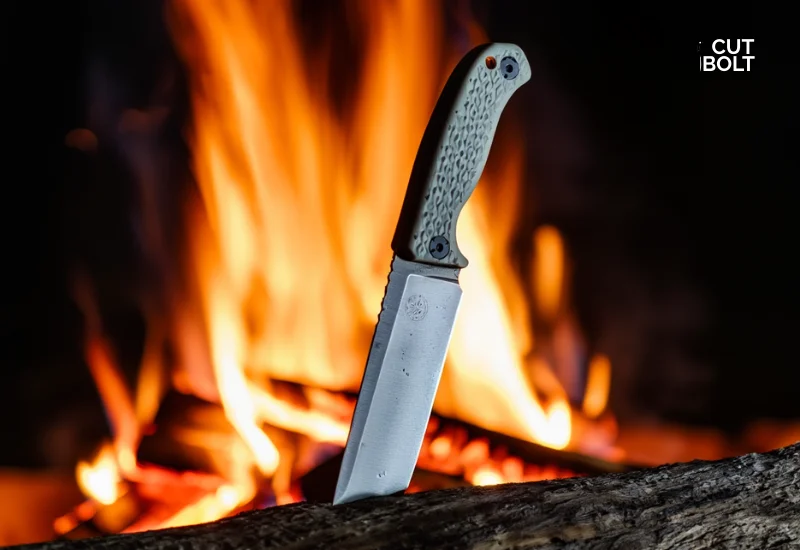
5. Off-Grid Tracker XXL (Cryo D2)
Best For: Hunting, Camping, Survival, Military
Specs:
- Blade Length: 7.5″
- Steel: Cryo D2 (HRC 61)
- Handle: G10 (Coyote Tan, 5.75″)
- Weight: 14 oz (without sheath)
The Breakdown: The Cryo D2 steel hardened to 61 HRC gives the Tracker XXL serious edge retention for a knife of its size, while the cryogenic treatment stabilizes the microstructure, improving toughness beyond standard D2. The 5 mm thick, 2-inch-wide blade delivers chopping authority without feeling like a full machete, and the flat grind helps maintain slicing efficiency despite the blade’s mass. The graywash finish reduces friction and enhances corrosion resistance, ideal for a tool meant to split wood, clear brush, and handle camp tasks.
Design & Ergonomics: The long G10 handle offers a secure, hand-filling grip with enough real estate for power swings or choked-up control. Its contouring keeps vibration manageable during chopping, and the texture provides traction even when wet. The knife’s forward bias mimics the momentum of a compact Golok, making it remarkably effective for its size. The Kydex sheath with OG Lo-Pro mount offers solid retention and low-carry capability, though the setup is understandably bulkier due to the blade’s footprint.
Pros
- Cryo D2 provides excellent hardness and edge holding
- Outstanding chopping power with Golok-inspired geometry
- Large, grippy G10 handle for controlled heavy use
- Tough Kydex sheath with secure low-carry plate
Cons
- Size and weight limit fine-detail carving
- Forward balance may fatigue inexperienced users
- D2 requires rust-preventive maintenance
- Sheath is robust but not compact
Our Honest Take: The Tracker XXL is a purpose-built heavy-use survival blade that hits harder than almost anything in its size class. If you need a tool that can chop, baton, and clear trail without stepping up to a machete, this is a powerhouse. Keep up with D2 maintenance and it’ll handle serious backcountry abuse with ease.
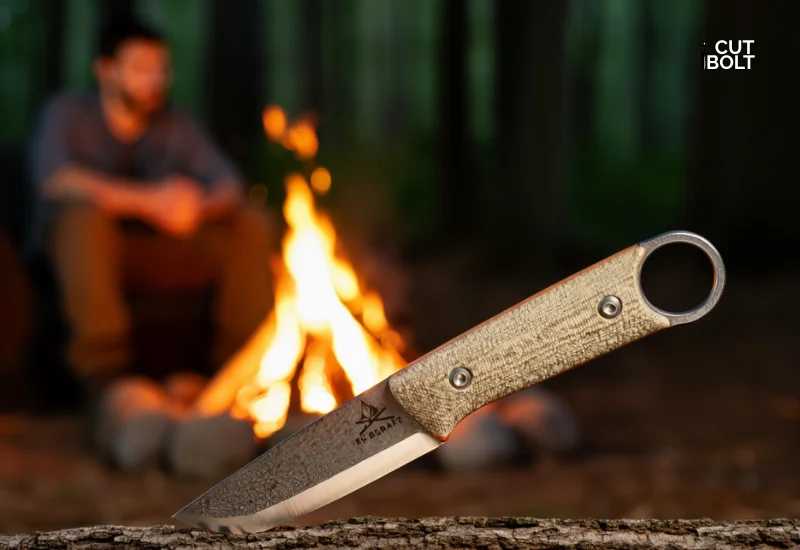
6. White River Firecraft Puukko (S35VN)
Best For: Fire Starting / Camp & Field Use
Specs:
- Blade Length: 3.75″
- Steel: CPM S35VN
- Handle: Micarta (Tan/Orange, 4.57″)
- Weight: 4.9 oz
The Breakdown: The CPM S35VN steel gives this Puukko excellent corrosion resistance, edge retention, and toughness, outperforming traditional carbon-steel Puukko designs without the maintenance demands. Its Scandi grind bites aggressively into wood, making feather sticks, notches, and tinder prep extremely efficient. The spine includes a dedicated ferro-rod striking notch, giving consistent sparks without dulling the cutting edge. At 0.12″ thick, the blade is slicey and precise while remaining sturdy enough for camp tasks.
Design & Ergonomics: The Micarta handle provides superb traction in wet or cold conditions, and its palm-filling contour avoids hotspots during prolonged carving. A steel bow-drill divot built into the handle adds a second fire-starting option—a rare and genuinely functional feature. Balance sits slightly forward, improving control for detail work. The Kydex sheath offers solid retention with ambidextrous carry, though its profile is more utility-focused than minimalist.
Pros
- Premium S35VN steel with excellent edge holding
- Scandi grind excels at bushcraft and fire prep
- Ferro-rod notch and bow-drill divot add real survival utility
- Lightweight with grippy Micarta handle
Cons
- Scandi edge requires careful sharpening technique
- Not suited for heavy batoning
- Sheath is practical but not the slimmest
- Shorter blade limits reach for large camp chores
Our Honest Take: For firecraft, carving, and general camp utility, the Firecraft Puukko punches far above its weight. The ferro-rod notch and bow-drill divot aren’t gimmicks—they work. If you want a lightweight, premium steel Puukko built specifically for fire starting and woodcraft, this one is hard to beat.
7. Ka-Bar BK7 (1095 Cro-Van) Best Big Survival Knife
Best For: Big Survival / Tactical Utility
Specs:
- Blade Length: 7.0″
- Steel: 1095 Cro-Van (56–58 HRC)
- Handle: Zytel (5.75″)
- Weight: 13.6 oz
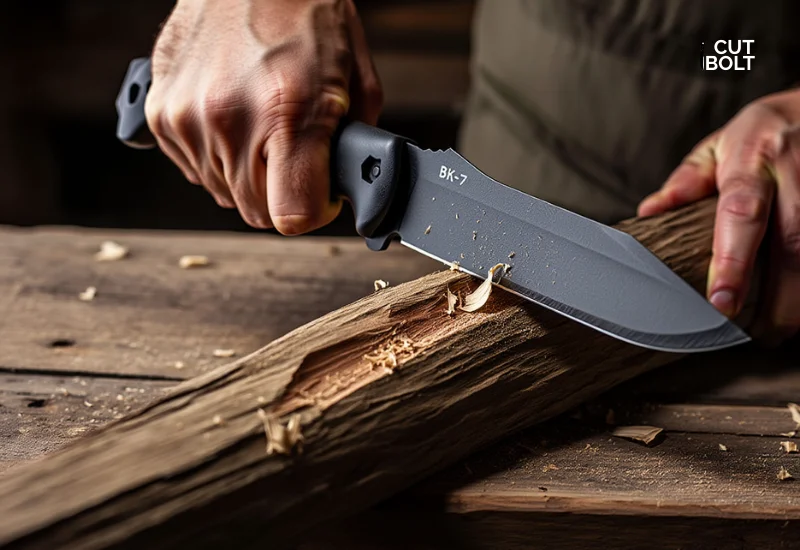
The Breakdown: The 1095 Cro-Van steel gives the BK7 a solid balance of toughness, ease of sharpening, and durability in hard survival use. Its 7-inch clip-point blade offers strong penetration with a long cutting edge, while the flat grind keeps the geometry efficient for everything from slicing to light chopping. At 0.19 inches thick, it’s stout without being unwieldy, and the black coating helps reduce glare and adds corrosion resistance—important for high-carbon steel in the field.
Design & Ergonomics: The Zytel handle is lightweight, durable, and shaped for a secure grip in both forward and reverse positions. It’s not as grippy as rubber or micarta, but its contouring makes up for it with stability during prolonged use. Balance sits slightly forward, helping with chopping and controlled power cuts. The included nylon sheath is functional, offering modular attachment points and good retention, though it isn’t as rigid or refined as modern Kydex setups.
Pros
- Tough, easily maintained 1095 Cro-Van steel
- Versatile 7″ blade suited for both survival and tactical roles
- Lightweight Zytel handle keeps fatigue low
- Proven Becker design with strong field reputation
Cons
- High-carbon steel needs regular oiling
- Nylon sheath isn’t as secure as Kydex
- Handle traction could be better when wet
- Large size reduces precision for fine tasks
Our Honest Take: The BK7 is a classic big survival knife—light for its size, tough for real-world abuse, and easy to maintain in the field. If you want a dependable large fixed blade with Becker lineage and proven performance, this one deserves a spot on your belt or pack.
8. Demko FreeReign (AUS-10A)
Best For: Survival & Field Utility
Specs:
- Blade Length: 5.0″
- Steel: AUS-10A
- Handle: Injection-molded rubber
- Weight: (Not specified—standard FreeReign is mid-weight for size)
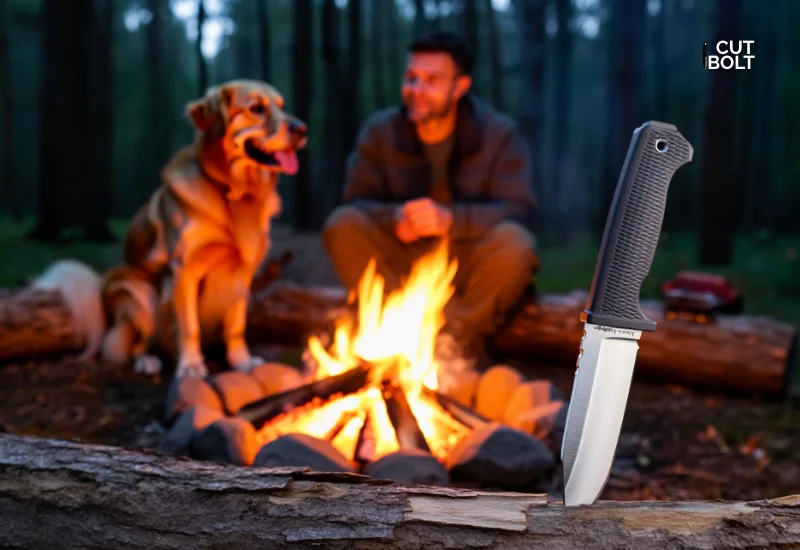
The Breakdown: The AUS-10A steel gives the FreeReign a strong mix of toughness, edge stability, and corrosion resistance, outperforming typical mid-grade stainless options in hard-use conditions. Its 5-inch drop-point blade and flat grind strike a balance between slicing efficiency and durability, making it capable of camp chores, field dressing, and light batoning. The blade’s geometry favors versatility rather than specialization—ideal for a general-purpose survival knife.
Design & Ergonomics: The injection-molded rubber handle offers excellent wet traction and shock absorption, making extended cutting or carving noticeably more comfortable. Its palm-swelling contour reduces hotspots while still feeling secure in bare or gloved hands. The nylon/polymer sheath provides solid retention with ambidextrous mounting, though its bulk is more utility-driven than streamlined. Overall, the knife’s mid-size layout gives strong control without feeling heavy or cumbersome.
Pros
- AUS-10A offers a great balance of toughness and corrosion resistance
- Comfortable rubber grip with excellent traction
- Versatile flat-ground drop point for camp and field tasks
- Durable ambidextrous nylon/polymer sheath
Cons
- Edge retention is good, but not super-steel level
- Rubber handle may feel “soft” to users who prefer G10 or Micarta
- Sheath is functional but not minimalist
- Not designed for heavy-duty chopping
Our Honest Take: The FreeReign is a practical, no-nonsense mid-size survival knife with one of the most comfortable rubber handles in its class. It’s tough enough for real outdoors use while staying light and controllable. If you want a dependable all-around fixed blade for camping and field work, this is a smart, well-priced choice.
9. Ka-Bar BK18 (1095 Cro-Van)
Best For: Most Comfortable Mid-Size Survival Knife
Specs:
- Blade Length: 4.625″
- Steel: 1095 Cro-Van (56–58 HRC)
- Handle: Ultramid
- Weight: 0.45 lb (7.2 oz)
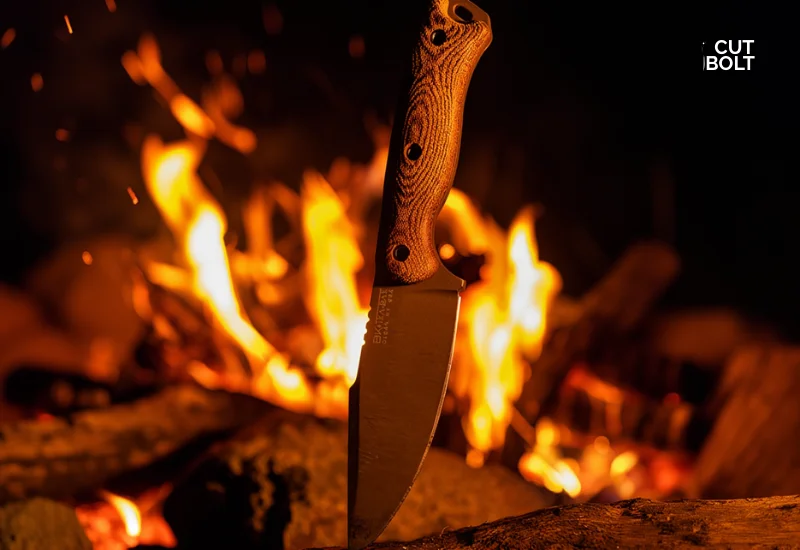
The Breakdown: The 1095 Cro-Van steel gives the BK18 dependable toughness and field-sharpening ease, making it ideal for real outdoor use. The harpoon-style blade adds tip strength and provides a natural thumb ramp for control, while the flat grind keeps slicing performance high despite the stock’s 0.165″ thickness. Its compact 4.625″ length offers a blend of utility and maneuverability, excelling at camp prep, carving, and general survival tasks without the bulk of larger Beckers.
Design & Ergonomics: Comfort is the BK18’s standout trait, thanks to its Ultramid handle, which offers a warm, hand-filling feel with excellent contouring. It minimizes hotspots during prolonged cutting and remains secure even with sweaty or gloved hands. The neutral shape supports multiple grips easily. The lightweight build keeps fatigue low, and the USA-made polymer sheath provides solid retention with straightforward, field-ready durability—though it’s more functional than refined.
Pros
- Extremely comfortable Ultramid handle
- Tough, easy-to-maintain 1095 Cro-Van steel
- Harpoon profile improves control and tip strength
- Lightweight for its size and surprisingly agile
Cons
- High-carbon steel needs frequent oiling
- Harpoon shape reduces slicing near the tip
- Sheath is durable but lacks premium features
- Not ideal for heavy batoning
Our Honest Take: If comfort matters to you—and it should—the BK18 is one of the best-feeling mid-size survival knives on the market. Paired with reliable Cro-Van steel and Becker’s proven design, it’s a superb everyday field knife for camping, hiking, and bushcraft.
10. Reiff F4 (CPM MagnaCut) Best Premium Survival Knife
Best For: Premium Bushcraft & Survival
Specs:
- Blade Length: 4.0″
- Steel: CPM MagnaCut (60–62 HRC, Cryo Treated)
- Handle: Canvas Micarta (5″)
- Weight: 6.9 oz
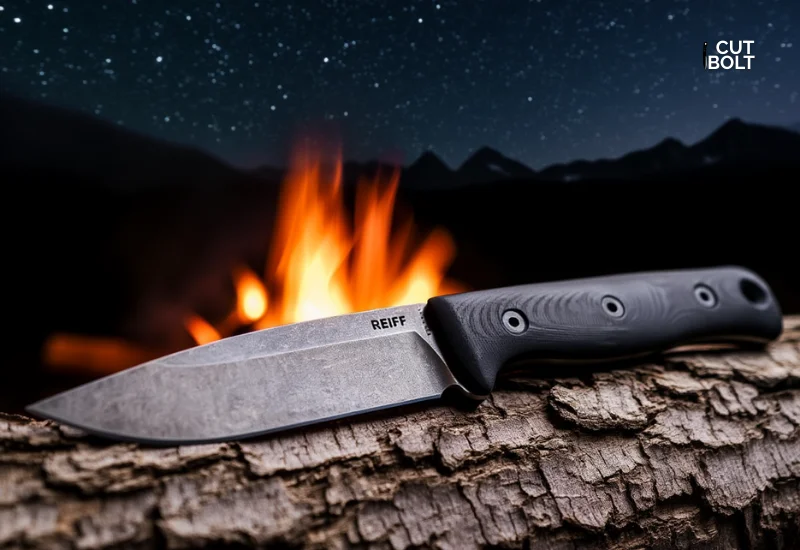
The Breakdown: The CPM MagnaCut steel is what elevates the F4 into true premium territory—its combination of corrosion resistance, edge retention, and toughness is unmatched in the stainless category. At 5/32″ (.156″) thick, with a slightly hollow saber grind, the blade is robust yet slicey, ideal for both survival abuse and precise bushcraft cuts. The convexed “V” edge transitions smoothly through wood, while the polished stonewash finish improves glide and hides wear. A 90-degree spine throws reliable sparks and handles tinder scraping with ease.
Design & Ergonomics: The 5″ canvas Micarta handle is one of the F4’s standout attributes, offering a warm, hand-conforming feel with zero noticeable hotspots. Its contouring promotes natural indexing in multiple grips, and the texture stays secure even when wet. The skeletonized full tang keeps the knife balanced and lighter than expected for the thickness. The choice of Kydex or Crazy Horse leather sheaths gives users a clean divide between modern retention and traditional carry preferences.
Pros
- Premium MagnaCut steel with elite all-around performance
- Slightly hollow saber grind blends strength and slicing
- Exceptionally comfortable Micarta handle
- Ferro-rod capable 90° spine with polished stonewash finish
Cons
- Premium pricing reflects the materials
- Convexed edge requires more skill to sharpen
- Not designed for heavy chopping
- Leather sheath option is beautiful but less weatherproof
Our Honest Take: The Reiff F4 is a top-tier survival/bushcraft knife built for users who want uncompromising steel, perfect ergonomics, and refined performance. It’s tough, balanced, and incredibly capable—an investment piece that genuinely meets the hype.
11. Toor Brauler – Best Tactical Survival Knife
Best For: Tactical Survival & Utility
Specs:
- Blade Length: 3.875″
- Steel: CPM CruWear (60–62 HRC)
- Handle: G10 (4.125″)
- Weight: 5.7 oz
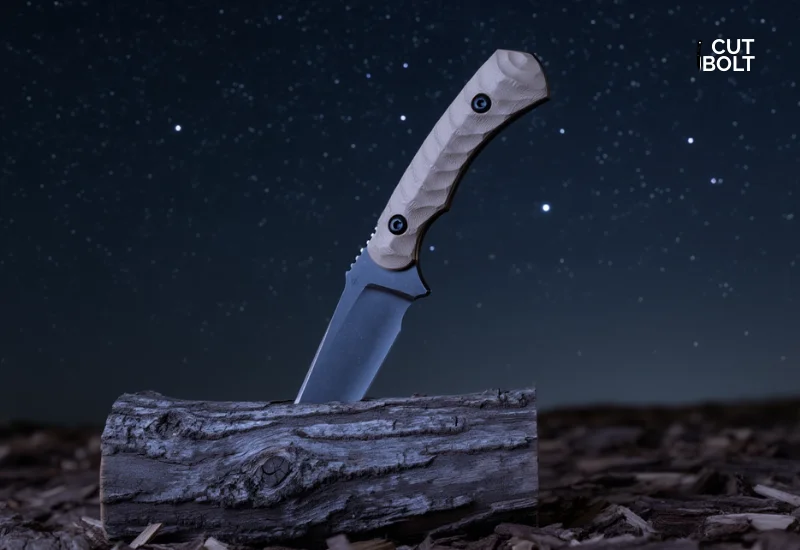
The Breakdown: Built from CPM CruWear, the Brauler delivers exceptional toughness, edge retention, and wear resistance, outperforming most steels in compact tactical blades. Its 0.1875″ thick stock and high flat grind create a strong yet slicey edge that handles both precision cuts and hard-use tasks without feeling overbuilt. The short 3.875″ blade is optimized for maximum control in tight spaces—ideal for field utility or close-quarters tactical situations.
Design & Ergonomics: The G10 scales feature Toor’s signature texturing, offering outstanding grip without becoming abrasive. The handle length is generous for a compact fixed blade, allowing a full purchase and excellent retention under stress. At the butt, the tungsten carbide Breacher Ball™ adds versatility for striking, glass breaking, and non-lethal applications. The FlexTech™ Kydex sheath, lined with suede, provides quiet draw, secure retention, and a minimal footprint for discreet carry—one of the most refined tactical sheaths in its class.
Pros
- CruWear steel offers elite toughness and edge life
- High flat grind gives excellent cutting efficiency
- Breacher Ball™ adds real tactical capability
- Compact, lightweight, and highly controllable
Cons
- Short blade limits reach for larger survival tasks
- Premium pricing for a compact knife
- G10 texture may feel sharp to sensitive hands
- Kydex sheath ride height may require adjustment
Our Honest Take: The Brauler is a compact tactical powerhouse—tough, efficient, and purpose-built for real-world use. If you want a small fixed blade that punches far above its size in both performance and durability, this is an outstanding choice for duty, EDC, or survival crossover roles.
12. ESEE Izula II (1095 Carbon Steel)
Best For: Small-Sized Survival & EDC Field Use
Specs:
- Blade Length: 2.875″
- Steel: 1095
- Handle: Micarta (3.88″)
- Weight: 3.3 oz
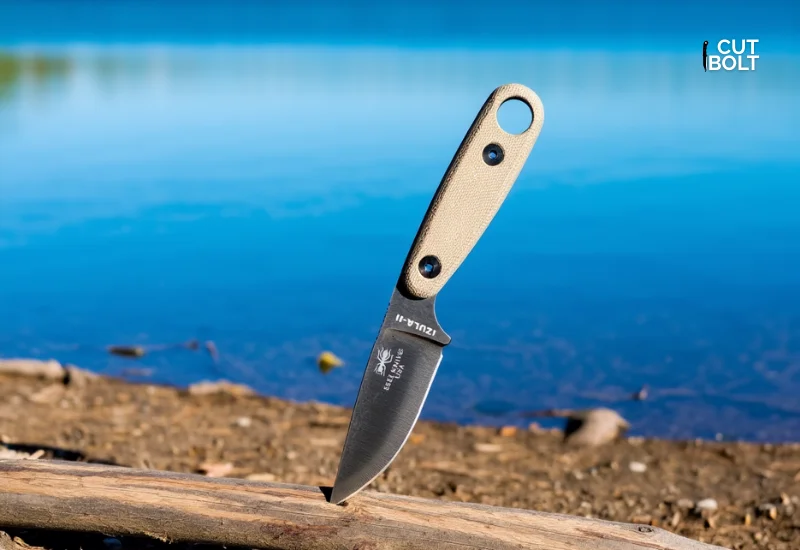
The Breakdown: The 1095 carbon steel used in the Izula II is known for its excellent toughness, easy field sharpening, and predictable performance—ideal for a compact survival knife. Despite its small size, the 0.16″ thick blade feels sturdy, and the flat grind keeps slicing crisp and controlled for tasks like feather sticks, food prep, or fine carving. The black stonewash helps minimize reflections and adds a layer of surface protection, though regular oiling is still essential with 1095.
Design & Ergonomics: The defining upgrade over the original Izula is the longer Micarta handle, which fills the hand better and dramatically improves comfort. The scales offer a warm, grippy texture even when wet, reducing fatigue during extended tasks. For carry, the lightweight polymer sheath provides secure retention and works well for neck, belt, or pack mounting. At only 3.3 ounces, the Izula II practically disappears in a kit, making it ideal as a primary ultralight knife or a backup survival blade.
Pros
- Tough, easy-to-maintain 1095 steel
- Excellent Micarta handle comfort for a small knife
- Ultra-lightweight yet durable construction
- Versatile sheath and broad carry options
Cons
- High-carbon steel needs frequent rust protection
- Short blade limits leverage and reach
- Polymer sheath is functional but basic
- Thick stock reduces slicing finesse compared to thinner Puukko-style blades
Our Honest Take: The Izula II is one of the best small fixed blades ever made for ultralight survival, hiking, and everyday field use. Compact, tough, and surprisingly comfortable, it delivers big capability in a tiny footprint. If you want a dependable small companion knife, this is a must-own.
13. Morakniv Bushcraft Black (High Carbon Steel)
Best For: Budget Bushcraft & Survival
Specs:
- Blade Length: 4.25″
- Steel: High Carbon Steel (DLC coated)
- Handle: Rubber (5.0″)
- Weight: 7.2 oz
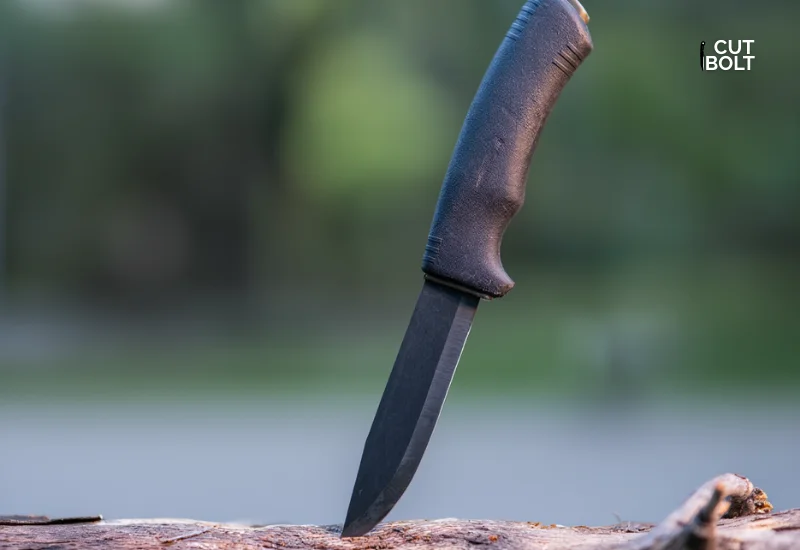
The Breakdown: The Bushcraft Black’s high-carbon steel delivers excellent sharpness, easy maintenance in the field, and impressive toughness for its price point. The 4.25″ drop-point blade with a DLC coating improves corrosion resistance and greatly reduces glare, while keeping friction low during wood processing. Its Scandinavian-style geometry (though not a full Scandi) excels at carving, notching, and feather sticks—making this one of the best-performing sub-$50 bushcraft knives available.
Design & Ergonomics: The standout feature is the high-friction rubber handle, which provides superb traction in wet, cold, or gloved conditions. Its shaping locks the hand in securely without causing hotspots during long carving sessions. The polymer sheath is basic but functional, featuring an integrated fire starter and diamond sharpener—a big value add. Its downside is the simple belt clip system, which some users replace with aftermarket Kydex for better retention and mounting options.
Pros
- Excellent value with strong bushcraft performance
- Grippy rubber handle with all-weather traction
- DLC-coated blade for improved corrosion resistance
- Sheath includes fire starter and diamond sharpener
Cons
- Basic polymer sheath with limited carry options
- Carbon steel still needs regular maintenance
- Handle can feel bulky for small hands
- Not designed for heavy prying or hard batoning
Our Honest Take: The Bushcraft Black is arguably the best budget bushcraft knife on the market. It’s comfortable, easy to sharpen, and extremely capable for fire prep and camp tasks. Upgrade the sheath if you want more carry flexibility, but the blade itself is an absolute win for the price.
14. Best Survival Knife for Camping: Schwarz Knives Lost Trail 5
Best For: Camping & Hard-Use Bushcraft
Specs:
- Blade Length: 5.0″
- Steel: A2 Tool Steel (62–63 HRC, Cryo Treated)
- Handle: Richlite (0.9″ thick)
- Weight: 9.9 oz (14.5 oz w/ sheath)
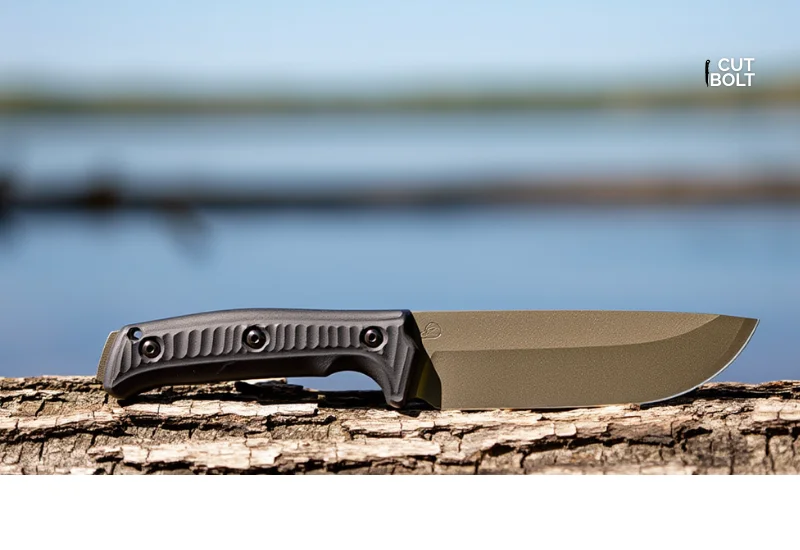
The Breakdown: The A2 tool steel on the LT5 is heat-treated impressively high at 62–63 HRC, giving it outstanding edge retention while still being tough enough for heavy wood processing. The 5/32″ (.156″) thick blade and saber grind provide the durability needed for batoning and light chopping, while the Cerakote coating guards the carbon steel from early rust in wet or dirty camp environments. The 5-inch drop-point profile makes it equally capable at carving, feather sticks, and fire prep.
Design & Ergonomics: The Richlite handle scales add a warm, grippy texture with enough thickness to stay comfortable during extended hard use. Its contouring locks the hand in without creating hotspots, even under heavy pressure. The sheath is a standout: Kydex, vacuum-formed for crisp retention, paired with a 304 stainless drop plate and leather belt loop for an exceptionally stable vertical carry. Standard eyelet spacing ensures compatibility with aftermarket clips and mounts, making the LT5 carry system one of the best in its class.
Pros
- High-performance A2 steel with excellent heat treatment
- Thick, durable blade ideal for camp wood processing
- Comfortable Richlite handle with great traction
- Exceptional Kydex sheath with drop plate and leather loop
Cons
- A2 is not stainless; requires regular oiling
- Saber grind is tough but not the sliciest
- Sheath system adds weight
- Richlite can feel firm compared to Micarta or rubber
Our Honest Take: The Lost Trail 5 is a rugged, well-designed camp knife built to take abuse while staying comfortable and controlled. With excellent steel treatment, a top-tier sheath, and a handle that shines in real camp work, it’s a superb pick for dedicated camping and bushcraft users who don’t mind caring for carbon steel.
15. TOPS Backpacker Bowie (1095 Carbon Steel)
Best For: Compact Camp & Hiking Utility
Specs:
- Blade Length: 4.50″
- Steel: 1095 (56–58 HRC)
- Handle: Micarta (3.75″)
- Weight: 7.2 oz
The Breakdown: With its 1095 carbon steel and flat-ground clip-point blade, the Backpacker Bowie delivers dependable toughness and easy field maintenance in a compact package. The 0.16″ thickness gives the blade enough backbone for light batoning or camp chores, while the stonewashed finish helps minimize glare and hides wear. Its bowie profile adds slicing power with a fine tip for controlled detail work—perfect for a smaller outdoor knife meant to complement a larger chopper or machete.
Design & Ergonomics: The green Micarta handle scales are thick, contoured, and grippy, providing a secure hold even with gloves or wet hands. Finger grooves, a protective guard, and spine jimping improve handling and safety during precise carving. A small spine hook functions as a pot-lifter rather than a cutting tool—handy around the campsite. The included Kydex sheath is sturdy with a rotating spring clip for adjustable carry angles, though its design is utilitarian rather than refined.
Pros
- Tough 1095 steel with easy sharpening
- Thick, ergonomic Micarta handle offers great grip
- Lightweight and highly packable for backpacking
- Versatile Kydex sheath with rotating belt clip
Cons
- Compact size limits leverage and chopping ability
- 1095 needs consistent rust prevention
- Finger grooves may feel restrictive to some users
- Sheath is durable but basic in features
Our Honest Take: The Backpacker Bowie is a small-but-capable outdoor companion—ideal as a lightweight camp knife or as part of a two-knife system with a larger blade. If you want a compact, tough, and comfortable fixed blade that punches above its size, this little TOPS delivers.
Quick Selection Guide: What to Look For
For a deep dive on blade geometry, tang types, and steel chemistry, read our comprehensive Survival Knife Buyer’s Guide.
1. The Steel: Toughness vs. Maintenance
High Carbon (1095, SK-5): The choice for absolute toughness and easy field sharpening. It requires oil to prevent rust but won’t chip easily. Top Pick: ESEE 4 (1095) or Cold Steel SRK (SK-5).
Tool Steel (D2, A2): Offers better edge retention than simple carbon steel but is harder to sharpen. It is “semi-stainless,” so it still needs some care. Top Pick: Off-Grid Backcountry V2 (Cryo D2).
Super Steels (MagnaCut, CruWear): The “Holy Grail” of toughness and corrosion resistance, but at a premium price point. Top Pick: Reiff F4 (MagnaCut) or Toor Brauler (CruWear).
2. Size & Weight: Matching the Tool to the Task
Compact (< 4 inches): Best for precision work, neck carry, or ultralight hiking.
- Top Pick: ESEE Izula II or White River Puukko.
Mid-Size (4 – 6 inches): The “Goldilocks” zone. Big enough to baton, small enough to carve.
- Top Pick: Ka-Bar BK18 or Demko FreeReign.
Large Choppers (7+ inches): Built for clearing trails and processing heavy firewood.
- Top Pick: Off-Grid Tracker XXL or Ka-Bar BK7.
3. Sheath & Carry
A survival knife is useless if it’s annoying to carry.
Kydex: The gold standard for secure, waterproof retention with a crisp “click.”
- Top Pick: Schwarz Lost Trail 5 (Premium Kydex with drop plate).
Nylon/Polymer: Functional and often cheaper, but can lack the rigid security of Kydex.
- Top Pick: Morakniv Bushcraft Black (Polymer with integrated firesteel).
1. What is the best steel for a survival knife?
There is no single “best” steel, only the right steel for your environment.
For Toughness: High-carbon steels like 1095 (found on the Ka-Bar Ek and TOPS Backpacker Bowie) are incredibly tough and easy to sharpen on a rock in the field, but they will rust if not oiled.
For Edge Retention: Tool steels like D2 (used on the Off-Grid Backcountry V2) hold an edge longer but are harder to sharpen.
For All-Around Performance: Modern super-steels like CPM MagnaCut (on the Reiff F4) offer the best balance of toughness, edge holding, and corrosion resistance, though they come at a premium price.
2. Should I get a plain edge or serrated edge?
For wilderness survival, a plain edge is almost always superior. It is easier to sharpen in the field and creates cleaner cuts for wood carving and feather sticks. Knives like the White River Firecraft Puukko utilize a clean edge specifically for efficient wood processing and tinder prep.
3. How thick should a survival knife be?
It depends on the intended use.
For General Utility: A thickness around 0.16″ to 0.18″ is a sweet spot. The TOPS Backpacker Bowie (0.16″) and Cold Steel SRK provide enough backbone for light batoning without sacrificing slicing ability.
For Heavy Chopping: If you plan to clear brush or split logs, look for a thickness of 0.20″ (5mm) or more, like the Off-Grid Tracker XXL, which uses its mass to chop with authority.
4. Do I really need a full-tang knife?
Yes. In a survival situation, a knife is a prying tool, a hammer, and a splitter. Full-tang construction means the metal extends through the entire handle, preventing the knife from snapping at the handle junction under stress. Robust knives on our list, such as the Off-Grid Backcountry V2, are built this way to endure abuse that would break cheaper knives.
5. How do I stop my carbon steel knife from rusting?
High-carbon knives like the Morakniv Bushcraft Black or ESEE 4 are prone to rust. To prevent this:
Keep the blade dry.
Oil the edge regularly (especially in humid environments).
Look for knives with protective coatings, like the Titanium Nitride on the Off-Grid V2 or the DLC coating on the Bushcraft Black, which significantly reduce corrosion risks.
Final Thoughts: Finding the Best Survival Knife
Picking the best survival knife comes down to your environment. For pure indestructibility, the ESEE 4 remains the gold standard. If you need a budget beater that punches above its weight, grab the Morakniv Bushcraft Black. And for those who need a blade that doubles as a hatchet, the Off-Grid Tracker XXL is the clear winner. Whichever you choose, keep it sharp, keep it oiled, and it will take care of you when it counts.